
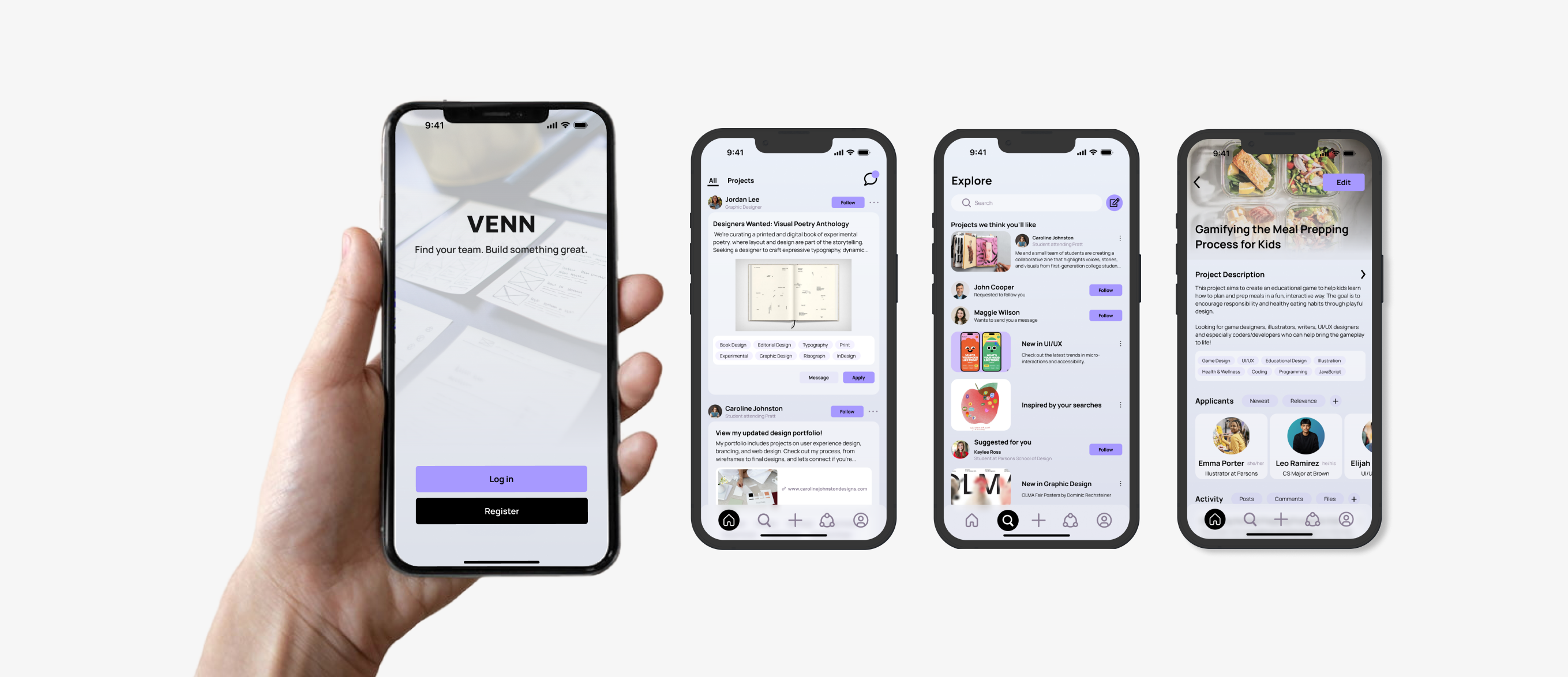
Venn is a space for creative people to connect, collaborate, and grow. Built for students, emerging professionals, and anyone exploring creative fields, it helps foster meaningful connections and community through shared work and interests.
Early career creatives and students are under increasing pressure to build strong portfolios in order to break into the industry. While there are many platforms for showcasing work or networking, fewer support actually creating that work through collaboration. As a result, finding meaningful, real world projects often depends on scattered tools, chance encounters, or existing connections.
March 2025
Figma
Figjam
Sole Designer
Gaining access to real world project experience is difficult for those without established networks. Most portfolio work from early creatives comes from coursework, which can feel repetitive and limited in scope, while opportunities outside of class are fragmented and hard to discover. This makes it challenging for them to build impactful work and develop the experience needed to grow.
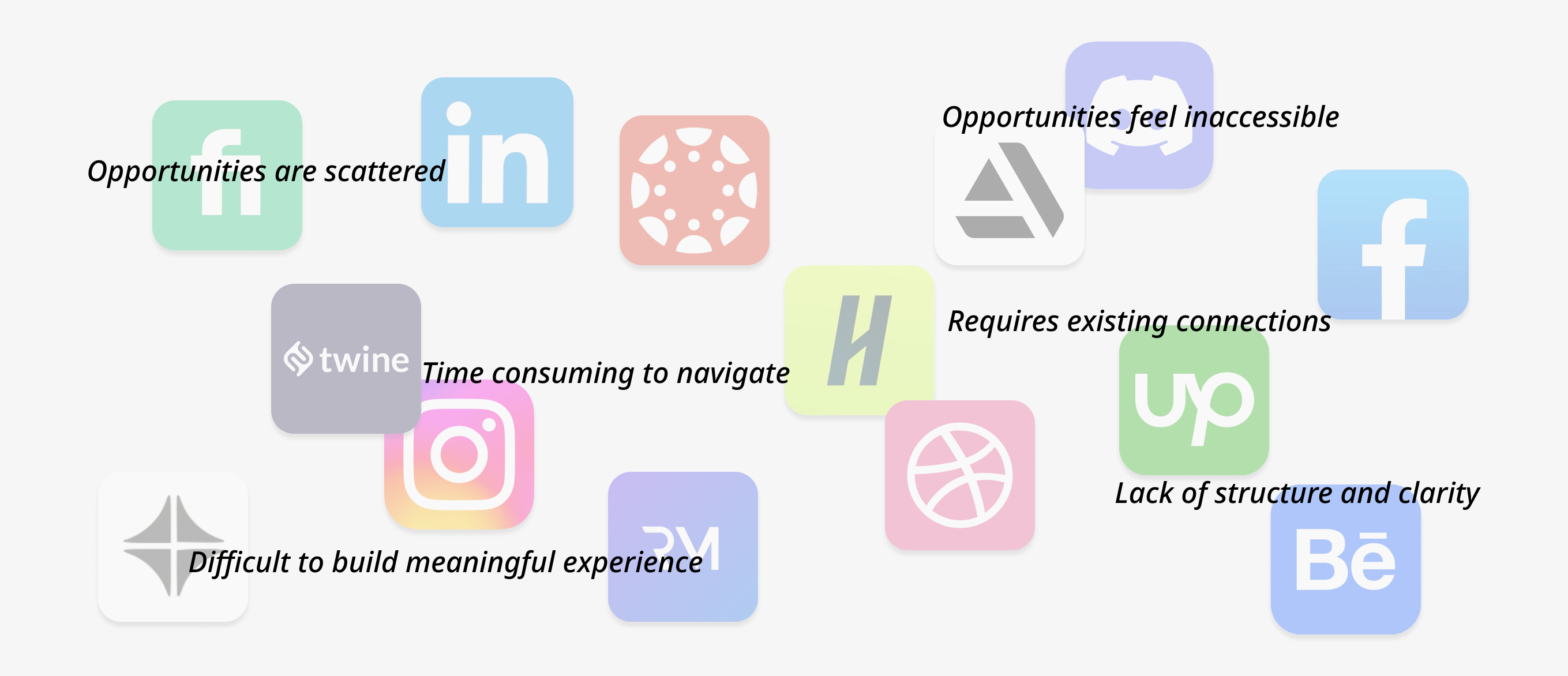
The current experience of finding projects is scattered across platforms, requiring constant searching and missed connections. I set out to design a more unified way to discover and engage with opportunities.
Create an accessible way for early career creatives to discover and join real world projects.
Support meaningful collaboration by connecting users based on skills, interests, and goals.
Help users build stronger, more diverse portfolios through hands on experience outside of coursework
Quick, guided setup tailored to creatives.
Choose your interests, roles, and goals and instantly see relevant projects and posts on your feed.
Effortlessly post projects and collaborations in a few simple steps.
Share your work and ideas with a broad creative community to gain visibility.
Tailor your posts to highlight specific skills, roles, and project needs.
Browse a wide range of creative projects tailored to your interests.
Separated page dedicated to projects.
Easy to view open projects.
Simple applications keep the process accessible for early-career creatives.
Chat and begin working with fellow creatives.
Easily create and share your own projects on Venn.
Once posted, track incoming applications, view collaborator profiles, and build your dream creative team.
.png)
Professional Networking

Student Job Board

Portfolio Showcase
.png)
Freelance Platform
.png)
Large user base and professional credibility
Strong job discovery & recruiter presence
.png)
Not focused on creatives or portfolios
Saturated with excessive text and information
Overloaded with random and uncurated content
Focused on student job seekers
Tied to universities, there's more trust and access
Feels outdated
Not creative-specific, mostly corporate and internship roles
Great for showcasing work
Strong visual focus
Strong design community
Not creative-specific, mostly corporate and internship roles
Old UI
Modern UI and freelancer-first experience
Great for showcasing services
Smaller community compared to LinkedIn/Behance
Discovery leans toward established freelancers early creatives
To reach a wider range of people, a survey was sent out and I received 36 responses back, gathering diverse insights across different ages, experience levels, and goals.

.png)

A surpirising piece of feedback I got was that users didn't really want mentorshop or professional networking as much as collaborating with like-minded individuals which shifted the app's focus pretty early on.
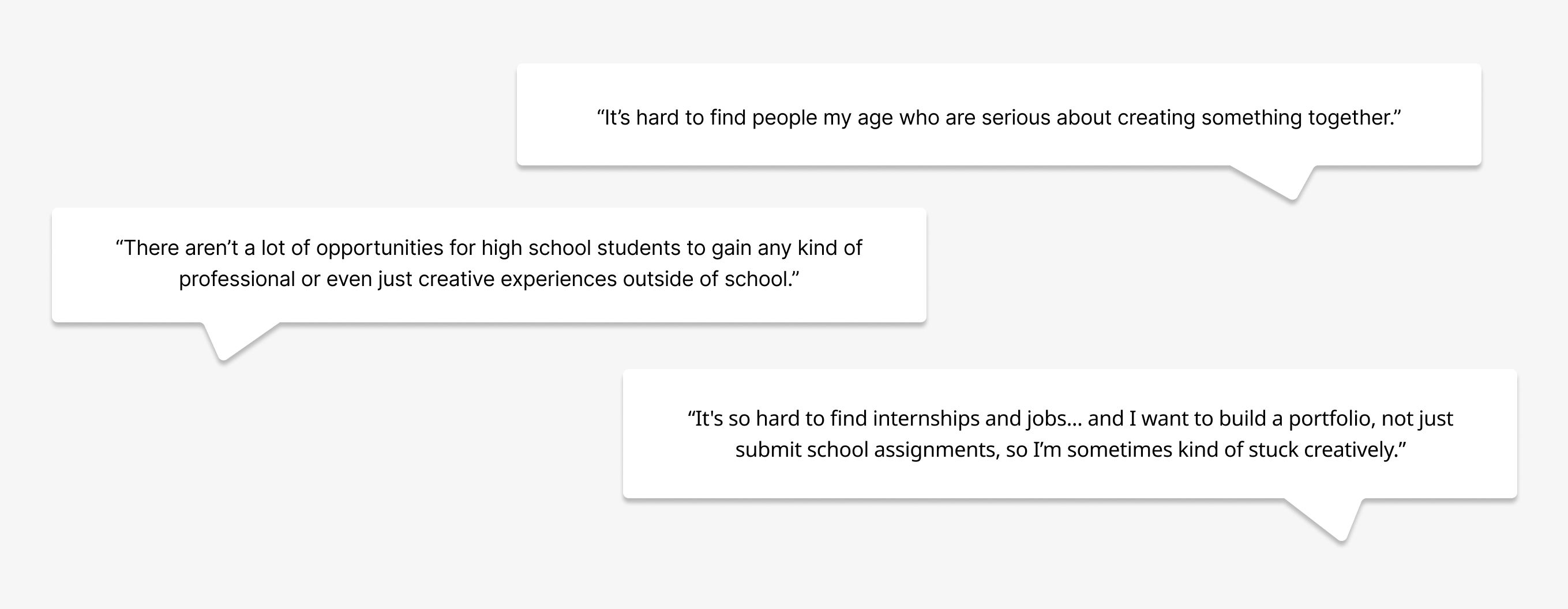
I conducted 22 interviews with a mix of college students, high school students, and a few post-grad individuals. Though not my primary user group, I was also able to speak with high schoolers through my work at RISD Admissions to better understand how early these challenges begin and how students first start thinking about building experience and portfolios.
After gaining a deeper understanding of our users, we developed personas to ground our research and create a shared reference point for future decisions. These personas helped align stakeholders around the project’s direction and strengthened confidence in the strategic shift.
.png)
Graphic Design student at MICA
Goals
To bulk up her portfolio enough to find a good summer internship.
Needs
Opportunities to contribute to portfolio-worthy work.
Clarity on what makes a strong project case study.
Pain Points
Frustrated her portfolio work is all class work that is often times rushed and incomplete.
.png)
Recent Grad, currently working freelance
Goals
To build a diverse portfolio beyond school work and transition into a full time creative role.
Needs
Access to real world projects that build relevant experience and lead to meaningful connections, including potential referrals and job opportunities.
Pain Points
Freelance platforms feel transactional and competitive and constant outreach often leads to no response.
Insight
Creatives (especially beginners) want low-pressure entry points.
Accessibility matters across skill levels and backgrounds.
Portfolio-building is a key motivator.
Implication
Focus on accessible, low-stakes project posting and joining.
Design inclusive onboarding and beginner-friendly language.
Emphasize project-based experience as a way to grow real-world portfolios.
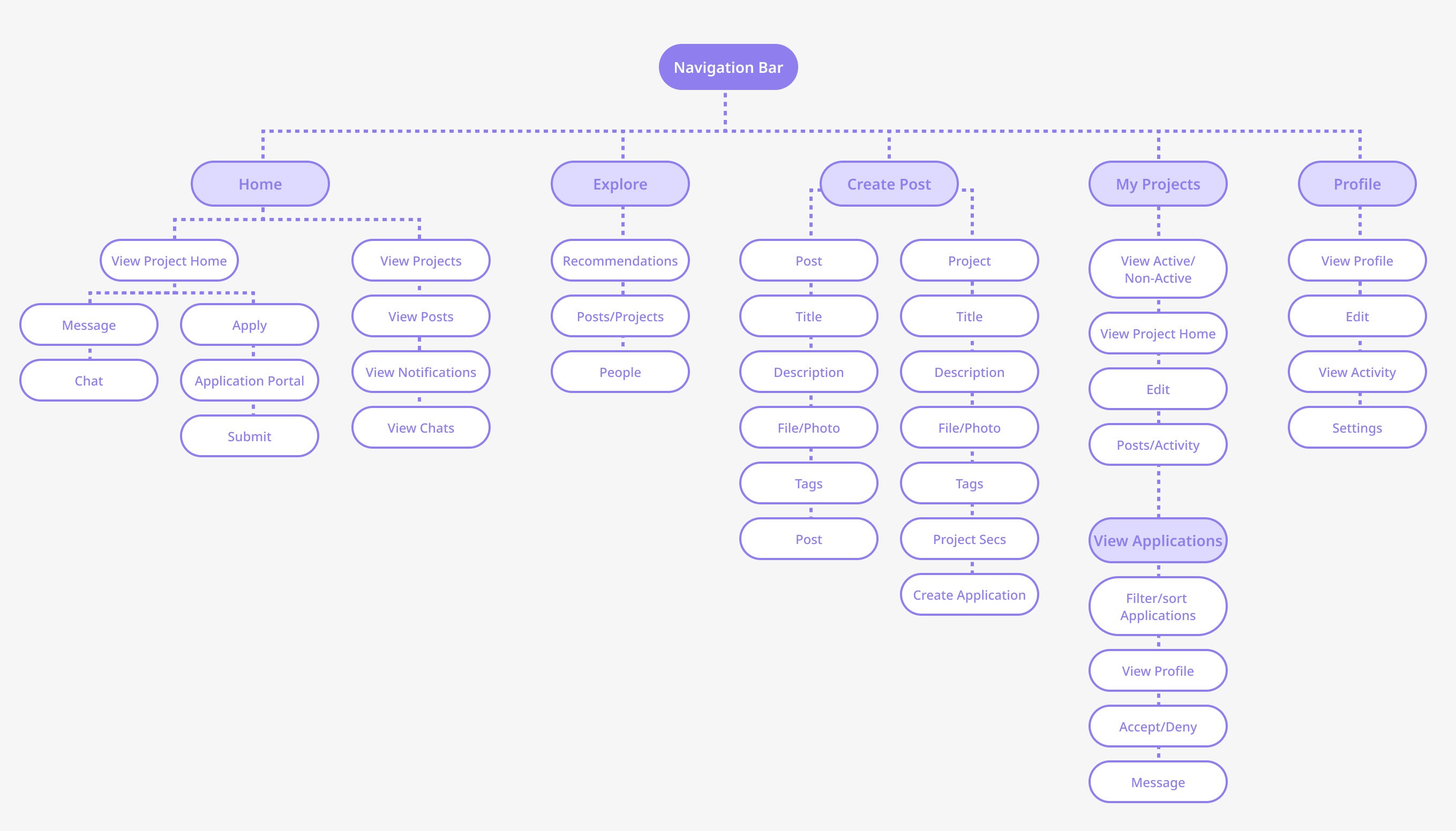
To start out, I created the information architecture to map out the core functionalities of the app and how they connect
Taking the lo-fidelity wireframes back to users, I got valuable feedback about the usability and functionality of the app.
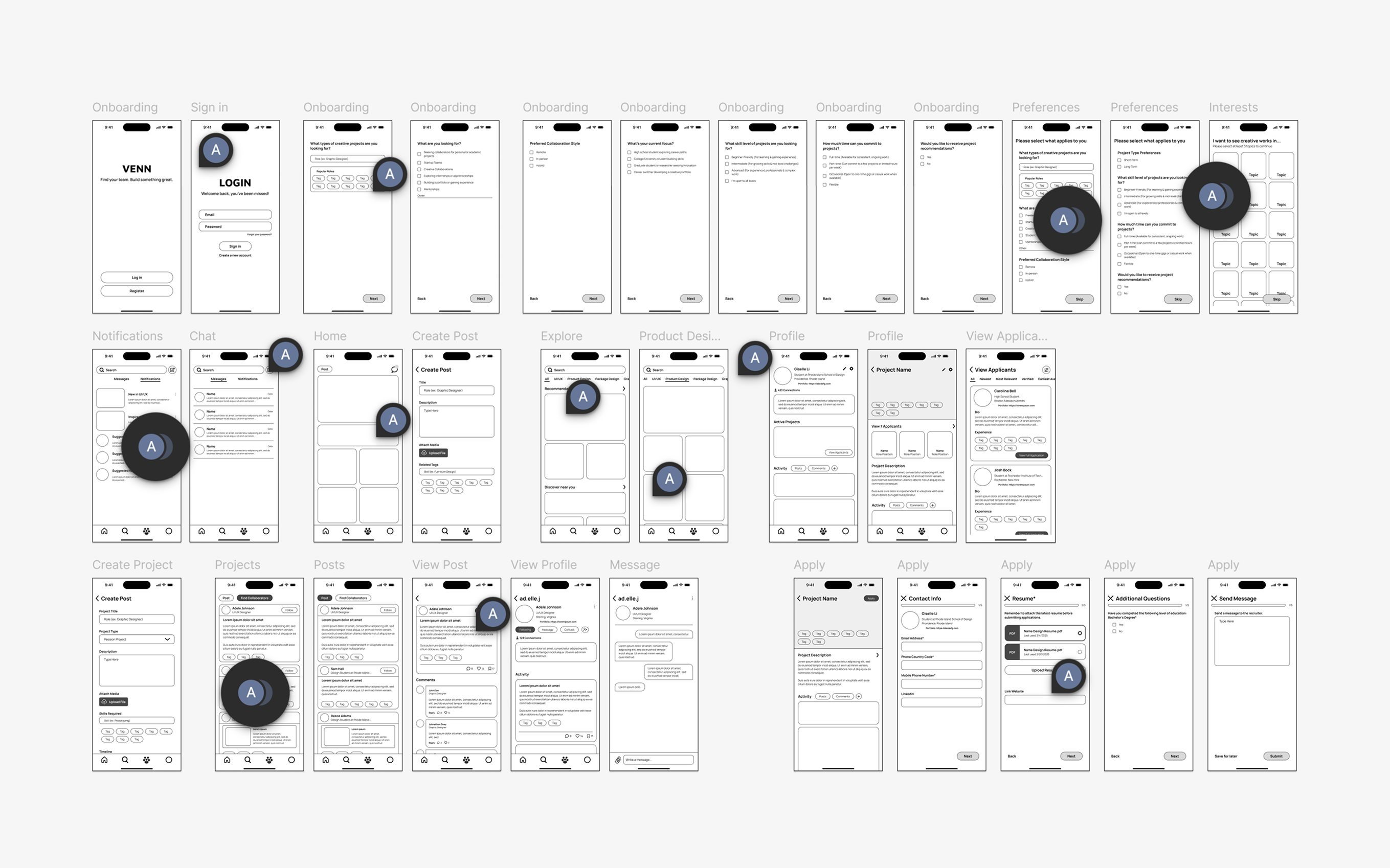
Users were confused about the difference between the normal posts and project posts. Ultimately feedback suggested that there should be a way to filter or differentiate which you want to see.
Despite trying to make onboarding easier, users still found it to be too long and unnecessary to go through.
With similar UI structures and components, people couldn't tell the difference or differentiate the need between an explore screen and the home screen.
I first envisioned a beginner-friendly Behance/LinkedIn type app, but most users wanted a low-barrier space to meet peers and join low-stakes projects for portfolio building.
Throughout the project, I learned the importance of adapting to feedback rather than holding onto my initial ideas too tightly.